
Mini facelift or SMAS · scar-sparing, natural-looking
Look fresher and visibly rejuvenated without appearing mask-like: the SMAS lift works on the deeper layers of tissue and so gives a natural, at the same time clearly defined and rested appearance.
Treatment
What is Facelift?
A facelift is a surgical procedure to tighten the skin and the deeper layers of tissue in the mid-face and on the neck. At the Ästhetik am Isartor practice in Munich we offer two procedures under the medical direction of Dr. Fabian Weinschenk: the mini facelift, with short incisions in front of and behind the ear, for mild to moderate skin laxity, and the full facelift using the SMAS technique, in which the deeper connective-tissue layer — the superficial musculoaponeurotic system — is repositioned as well. The SMAS procedure gives a natural-looking result without a mask-like expression and is long-lasting. It treats sagging cheeks, jowls, laxity of the neck and marionette lines. The incisions run hidden along the hairline at the temples and behind the ears. The operation takes two to five hours under general anaesthesia or twilight sedation, with one night as an inpatient.
Suitability
Who is Facelift suitable for?
A facelift addresses the typical signs of moderate and more advanced facial ageing — when creams, Botox and hyaluronic acid reach their limits. The choice between a mini and a full SMAS facelift is decided by the depth of the laxity.

Suitable for
A facelift is suitable where there are sagging cheeks, jowls, marionette lines from the mouth to the chin, a descent of the mid-face or laxity of the neck. For the mini facelift, mild to moderate laxity with good skin quality is the deciding factor; for the full SMAS facelift, pronounced laxity with a descent of the deeper tissue. A precondition in both variants: stable general health, no nicotine for at least 4 weeks beforehand (critical for wound healing in the face), realistic expectations — the aim is a refreshed appearance, NOT an artificially youthful or mask-like 'overdone' look.
Not suitable for
Where laxity is very early and there is no deeper descent of volume, non-surgical procedures — Botox, hyaluronic acid, vampire lift — are often the more suitable choice.
Which procedure comes into question — mini or full SMAS facelift — we decide together in the personal initial consultation (€100), after assessing the degree of laxity, skin elasticity and the bone anatomy.
Method
Two procedures. The depth of the laxity decides.
The essential difference between a mini and a full facelift lies in whether only the skin or also the deeper SMAS layer is repositioned. The choice follows the clinical findings.
- Minimally invasive
Mini
Mini facelift
- How it works
- Short incisions in front of and behind the ear, subcutaneous skin tightening
- Strength
- Shorter recovery · earlier correction
- Areas
- Mid-face · jawline (mild to moderate)
- Standard
SMAS
Full facelift (SMAS)
- How it works
- Skin plus the deeper SMAS layer repositioned along a defined vector
- Strength
- Natural-looking result · no mask-like tension
- Areas
- The complete cheek, jaw and neck zone
With both procedures the incisions run along the hairline at the temples and behind the ears — the scars stay covered by the hair. Targeted lifts of individual zones (forehead / mid-face / neck) are possible in both variants. A facelift is moreover usually carried out in combination with autologous fat for contouring volume. The indication is established in the medical initial consultation (€100). Clinic fees are shown separately.
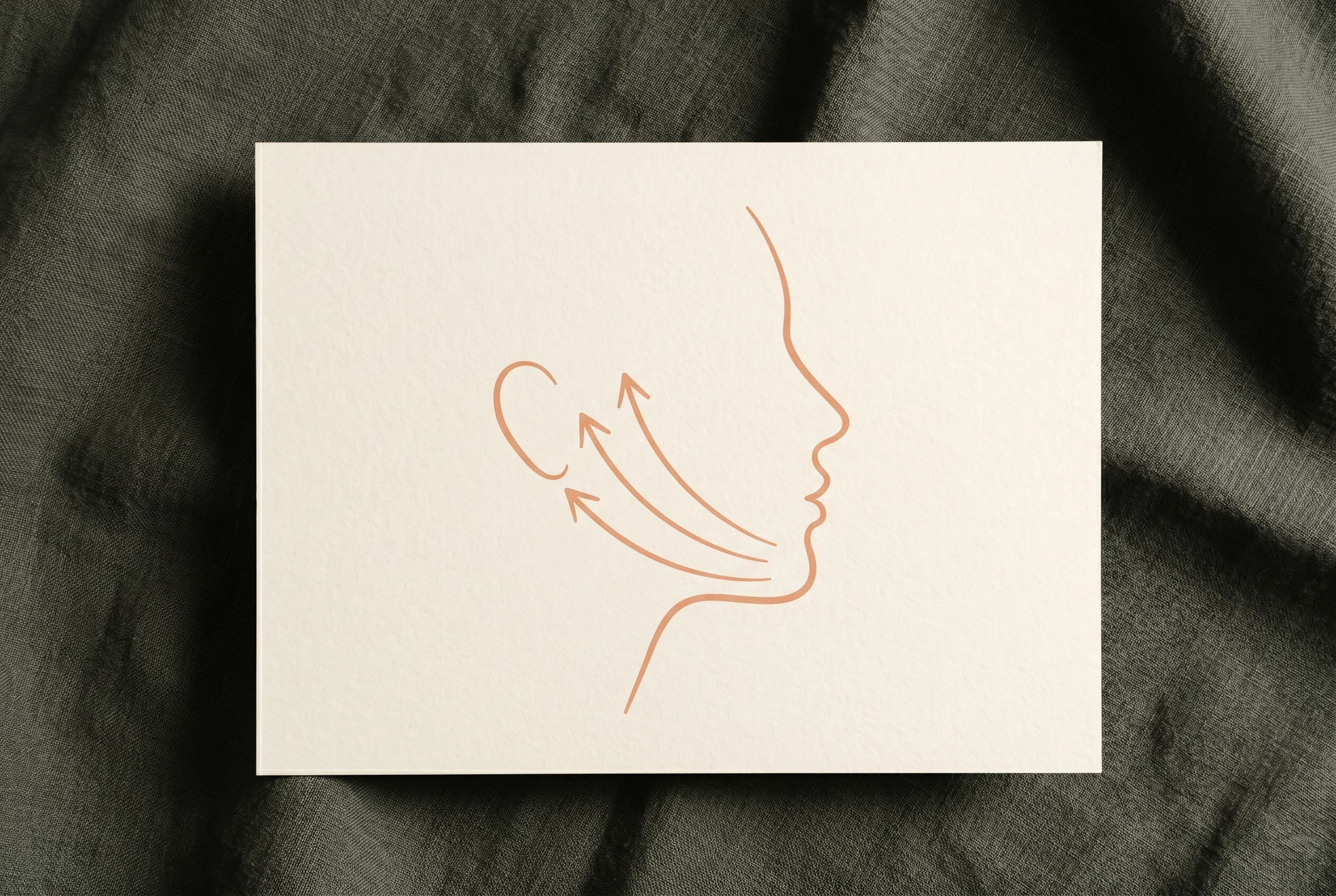
SMAS vector
Skin alone goes on ageing. SMAS holds.
The SMAS procedure repositions not only the skin but also the superficial musculoaponeurotic system layer beneath it — precisely along a vector that runs from the chin upwards towards the ear and the temple. That is exactly why the result looks natural (no mask-like, overdone appearance) and is long-lasting.
Look refreshed and younger — not mask-like. Not tense. Simply as though you had slept restfully for ten years.
Procedure
How the procedure works
Four steps, clearly separated — from the initial consultation through the preparation with consistent nicotine abstinence to the aftercare with swelling management and a visible final result after about one to two months.
 Schritt 01approx. 60 min.
Consultation
In the personal initial consultation (€100) we assess skin quality, the degree of laxity and the bone anatomy clinically. We discuss which procedure comes into question — mini or full SMAS facelift. You receive a written cost estimate afterwards; where upper or lower eyelid surgery is wanted as well, the combined operation is planned together.
 Schritt 02
Preparation
The pre-operative tests (blood count, ECG where indicated) must be available. No nicotine for at least 4 weeks beforehand and 4 weeks afterwards — that is the most critical precondition for clean wound healing in the face. No blood-thinning medication in the 14 days beforehand. For the one-night inpatient stay, pack a small bag with loose button-through tops — no pullovers over the head after the operation.
 Schritt 032–5 hours
Operation
The operation is carried out under general anaesthesia or twilight sedation. The incisions run along the natural hairline at the temples and behind the ears. With the full facelift, the SMAS layer is mobilised and repositioned along the planned vector; a low-tension wound closure follows.
 Schritt 04
Aftercare
An inpatient stay of 1 night. Compression dressing for 1-2 days; the drains are removed after 24-48 hours. Sutures out after about 1 week. Swelling and haematomas recede within 2-3 weeks; after about 12 days the swelling is gone; the final result becomes visible after one to two months. Social recovery takes 2-3 weeks; desk work is often possible again after only a few days; light sport after 4 weeks, full sport after 6 weeks.
Facts
Key facts
- Type
- surgical, outpatient or 1 night
- Anaesthesia
- general anaesthesia or twilight sedation
- Duration mini
- 2–3 hours
- Duration SMAS
- 3–5 hours
- Stay
- outpatient or 1 night
- Incisions
- hairline + behind the ears · covered
- Sutures out
- after about 1 week
- Swelling gone
- after about 12 days
- Desk work
- after a few days
- Light sport
- after 4 weeks
- Full sport
- after 6 weeks
- Nicotine abstinence
- ≥ 4 wks before + 4 wks after
- Consultation
- €100 · required before every treatment
Recovery
Recovery & final result
DAY
0–2.
Compression dressing.
Operation; the compression dressing goes on directly afterwards. 1 night of inpatient observation. The drains are removed after 24-48 hours. Pain is usually slight — well managed with painkillers.
DAY
3–7.
Swelling, patience.
Haematomas and swelling are at their most pronounced in this phase — but they are already receding. Rest, cooling, keeping the head elevated. Button-through tops, no pullovers over the head.
DAY
7–12.
Sutures out, the swelling subsides.
Sutures out after about 7 days. The swelling subsides step by step; after about 12 days it is gone; the final result becomes visible after one to two months. Desk work is possible again after a few days.
WEEK
3–6.
Back in everyday life.
Social recovery is as a rule complete after 2-3 weeks. Light sport after 4 weeks, full sport after 6 weeks. The scars run along the hairline and are covered by the hair.
MONTH
3–12.
The final result is stable.
The final result stabilises after 3-6 months — the shape looks naturally refreshed, NOT mask-like and overdone. The scars fade over 6-12 months.
Endergebnis
The swelling is gone after about 12 days; the final result is visible after one to two months and stabilises over 3–6 months.
Looking refreshed — without appearing mask-like: the SMAS technique works on the deeper layers of tissue and so makes a natural, clearly defined and rested appearance possible. The ageing process is not halted; it continues from the new starting point. Complementary non-surgical treatments such as Botox or hyaluronic acid can accompany the result over time.
Twelve days
Patience.
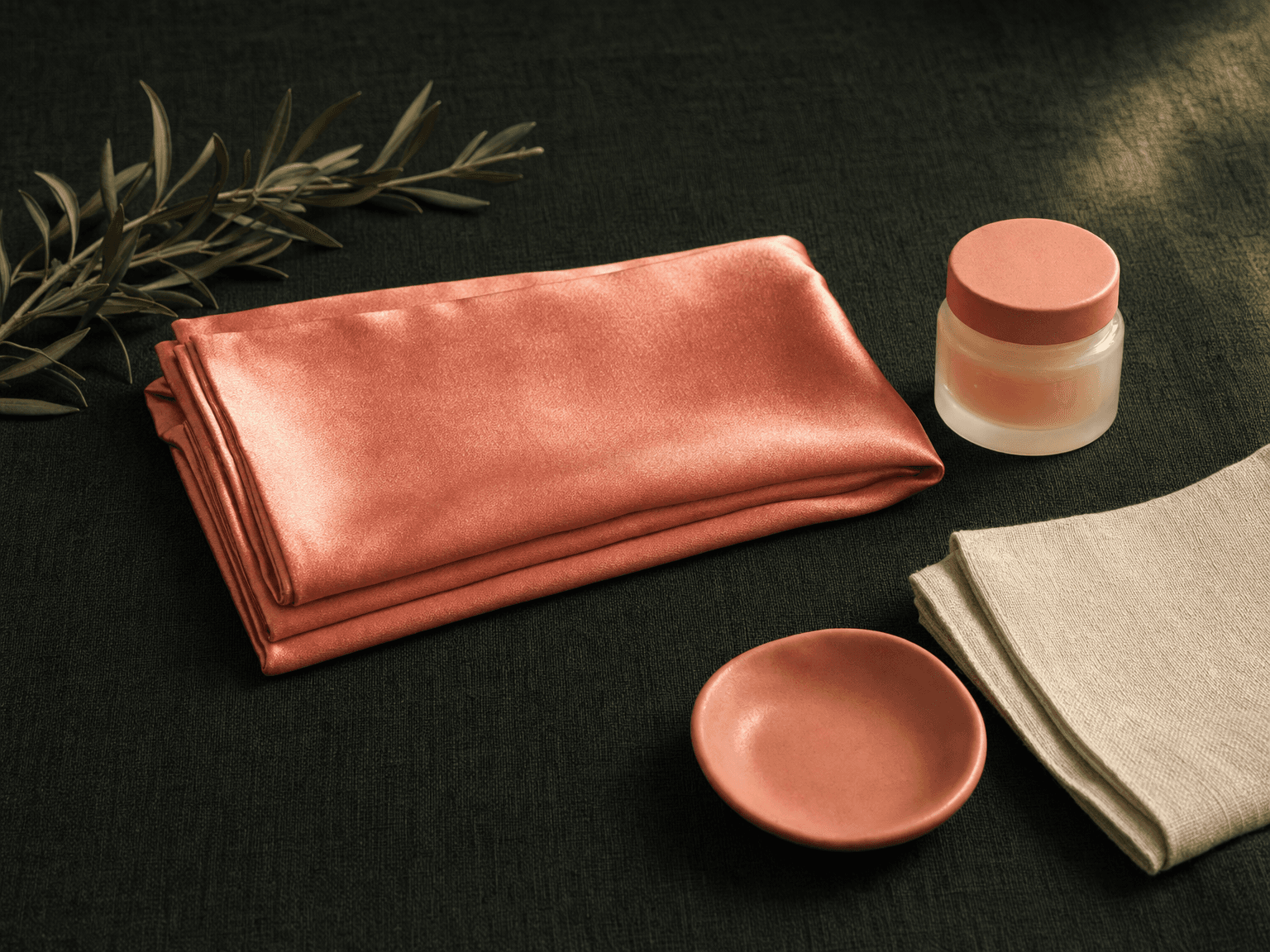
The first twelve days decide the quality of the healing: it is best to sleep on a silk pillowcase, to avoid friction on the freshly healed lines of skin. Consistent nicotine abstinence for a further four weeks after the operation. After about twelve days the swelling is gone; the final result is fully visible after one to two months.
Consultation
100€
approx. 45 min · medical · mandatory before every treatment (§ 8 HWG)
Let us establish the indication together.
Which method suits your situation can only be established reliably in a personal examination and consultation.
What is included
- Examination & establishing the indication
- Choice of method, risks & alternatives
- Written cost estimate afterwards
Risks
Risks & informed consent
Carried out properly, the facelift is an established procedure. We discuss all risks in detail in the personal informed-consent consultation in accordance with § 8 HWG (German Health Advertising Act). Nicotine abstinence is the most critical precondition.
- General
Swelling and haematomas in the face are part of the expected course in the first two to three weeks — after about 12 days they are in most cases visibly resolved; the final result becomes apparent after one to two months. Wound-healing disorders are rare in a modern practice where the operation is properly conducted — the decisive factor is nicotine abstinence for at least 4 weeks before and 4 weeks after the procedure. Without sufficient abstinence, the risk of wound-healing disorders in the face is markedly increased.
- Specific
A temporary change of sensation in the cheek and neck area is common after facelifts and as a rule recedes within months. Visible scars run along the hairline and around the ear — where the operation is carried out properly, and once they have matured, they are so hidden in the hairline that they are barely visible any more. Asymmetries are minimised by precise pre-operative vector planning. A mask-like, overdone appearance is avoided by repositioning the SMAS — rather than by skin tension alone; that is the essential difference from the classic skin-lifting method.
- Very rare
An injury to the facial nerve (N. facialis) is very rare — we choose the SMAS incisions so that the course of the nerve is structurally respected. A complete loss of skin sensation in the cheek area is very rare. Thromboembolic events are avoided by early mobilisation and, where indicated, heparin prophylaxis.
All individual risks are documented in detail during the personal informed-consent consultation in accordance with § 8 HWG (German Health Advertising Act).
Costs
Costs at a glance
The mini facelift starts from €6,900, the full facelift using the SMAS technique from €11,900. The specific calculation depends on the choice of anaesthesia, the length of the operation and any combined operation with eyelid surgery.
Starting price
from €6,900 Mini facelift (full SMAS from €11,900)
Procedures compared
Mini facelift vs. full SMAS facelift
| Aspect | Mini facelift | Full SMAS facelift |
|---|---|---|
| Procedure | subcutaneous skin tightening | skin + SMAS layer repositioned |
| Indication | mild to moderate laxity | pronounced laxity + deeper descent |
| Surgery time | 2–3 hours | 3–5 hours |
| Anaesthesia | general anaesthesia or twilight sedation | general anaesthesia |
| Stay | outpatient or 1 night | 1 night inpatient |
| Incisions | in front of + behind the ear | hairline + behind the ears |
| Starting price | from €6,900 | from €11,900 |
Which procedure comes into question depends on the starting findings, skin elasticity, the desired duration of effect and the recovery time. It is frequently combined with upper or lower eyelid surgery in one session. The indication is established in the medical initial consultation (€100). Clinic fees are shown separately.
All starting prices are net · plus 19% VAT · excluding clinic fees for anaesthesia and overnight stay. Individual cost estimate in the personal initial consultation (€100).
Questions
Frequently asked questions
What does a facelift cost in Munich?
The mini facelift starts from €6,900, the full facelift using the SMAS technique from €11,900. The specific calculation depends on the choice of anaesthesia (twilight sedation vs. general anaesthesia), the length of the operation and any combined operation with upper or lower eyelid surgery. You receive a written cost estimate in the initial consultation (€100).
Mini or SMAS facelift — how is the decision made?
The depth of the laxity decides. Mini facelift: for mild to moderate skin laxity with good skin quality — shorter recovery. Full SMAS facelift: for pronounced laxity with a descent of the deeper tissue layer — a natural-looking, long-lasting result, because the SMAS layer is repositioned as well. We decide together in the initial consultation (€100), on the basis of the clinical assessment.
How long does a facelift last?
The facelift is long-lasting — the skin goes on ageing, from the new, younger starting point. The full facelift using the SMAS technique lasts particularly long, because the deeper repositioning corrects the age-related descent of the tissue layers, not only the skin. A refresher is possible after some years; many patients combine the facelift with non-surgical maintenance treatments (Botox, hyaluronic acid).
How visible will the scars be?
The incisions run along the natural hairline and around the ear (in front of the tragus, behind the earlobe and, where needed, into the haired area of the temple). Where the operation and the wound healing proceed properly, after 6-12 months the scars are so hidden in the hair and in the creases of the skin that they are barely visible any more.
When will I see the final result?
After about 12 days the swelling has subsided; the final result becomes apparent after one to two months. The shape fully stabilises over 3-6 months. The scars fade over a further 6-12 months.
How safe is a facelift in Munich?
In experienced hands and with a properly conducted operation, the facelift is a very safe procedure. The preconditions: stable general health, no nicotine for at least 4 weeks before and 4 weeks after the operation (critical for wound healing in the face), no blood-thinning medication in the 14 days beforehand. All risks are documented in detail in the personal informed-consent consultation in accordance with § 8 HWG.
What are the risks?
General surgical risks (swelling, haematoma, wound-healing disorder) are rare in a modern practice. Specific: a temporary change of sensation in the cheek and neck area (reversible), asymmetry (minimised by precise pre-operative vector planning), very rarely an injury to the facial nerve (N. facialis). Nicotine use considerably impairs wound healing and is a relative contraindication. All risks are documented in detail in the informed-consent consultation in accordance with § 8 HWG.
Can I have eyelid surgery at the same time?
Yes, very often. A combined operation with upper and/or lower eyelid surgery is carried out routinely in the same session — for a comprehensive facial rejuvenation. The combined operation does not lead to a substantially longer recovery, but it does make the operation more complex. The indication is established in the initial consultation.
Why don't you show before-and-after photographs on your website?
For two reasons — one legal, one ethical. First, the German Heilmittelwerbegesetz (§ 11 HWG, the Health Advertising Act) prohibits advertising surgical plastic procedures with before-and-after photographs on publicly accessible websites — a rule in force since 2012 that protects patients from distorted promotional depictions. Second, we respect our patients' privacy: even where written consent exists, many would rather intimate photographs of their body did not circulate on the open web. What you can expect instead: in the personal initial consultation (€100) we show you anonymised examples from our own practice documentation — matched to your indication, your build and your aesthetic goal. Those images are shown with the written consent of the patients concerned, exclusively within the protected setting of the consultation, and are never published online. You get a realistic sense of what to expect without anyone having to give up their privacy for someone else's advertising.
What should I look for when choosing a doctor for aesthetic plastic surgery in Munich?
Three objective criteria help you get your bearings. First, the specialist qualification: "Facharzt für Plastische und Ästhetische Chirurgie" is a legally protected German specialist title requiring several years of specialist training — unlike general, unprotected descriptions such as "cosmetic surgeon". Second, membership of a medical professional society such as the DGPRÄC (the German Society of Plastic, Reconstructive and Aesthetic Surgeons), which requires binding professional standards and continuous further training. Third, the quality of the consultation: a reputable practice takes its time, is honest about risks, alternatives and realistically achievable results, and does not push you towards a decision. At Ästhetik am Isartor the medical direction lies with Dr. Fabian Weinschenk, specialist in plastic and aesthetic surgery (Facharzt) and a member of the DGPRÄC. Procedures are carried out personally by the specialist, and every treatment is preceded by a detailed medical informed-consent consultation (chargeable at €100).
Related
Related treatments
Upper eyelid surgery
Frequently combined with the facelift in the same session.
Learn more
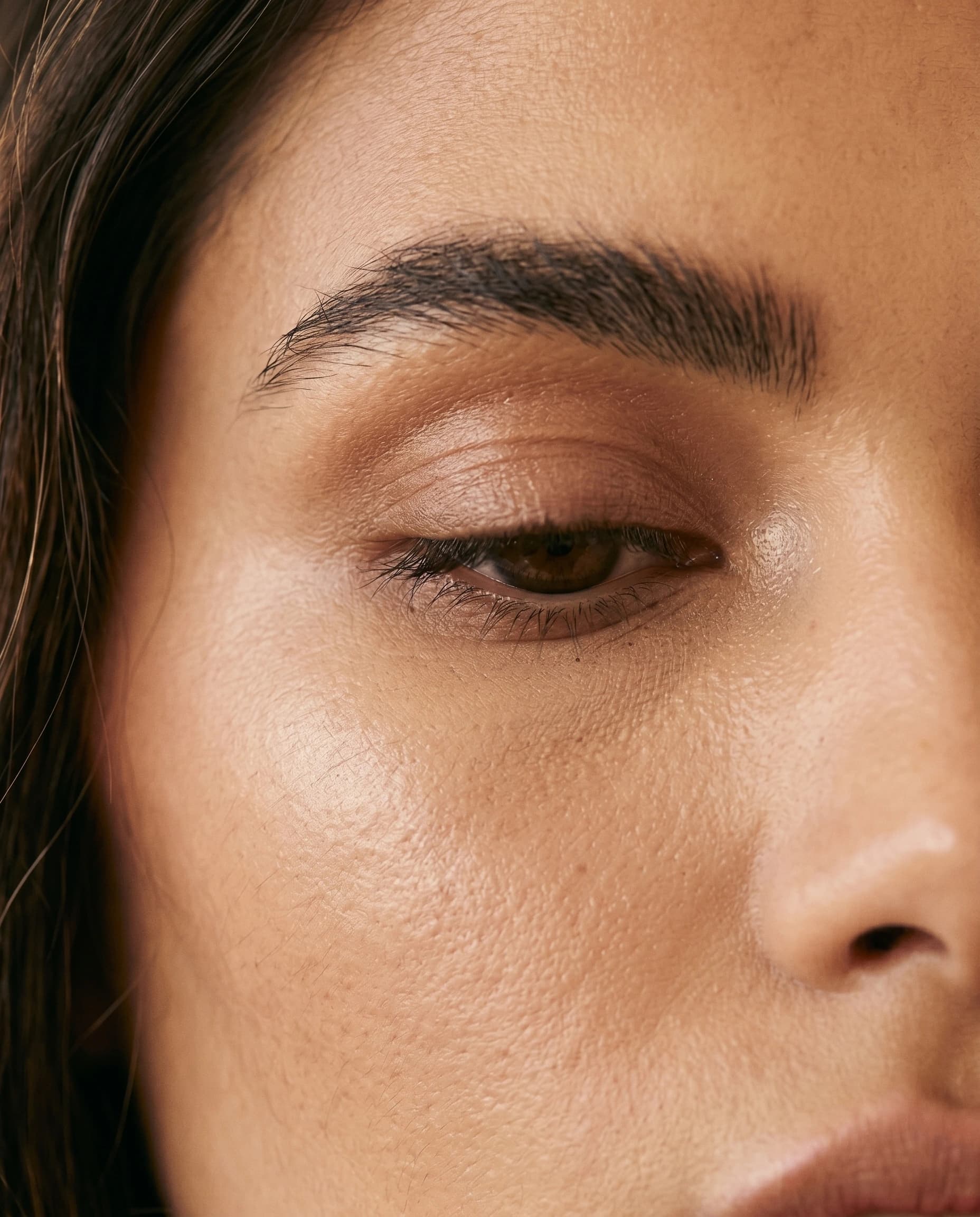
Lower eyelid surgery
Where there are under-eye bags, it can be combined with the facelift as well.
Learn more
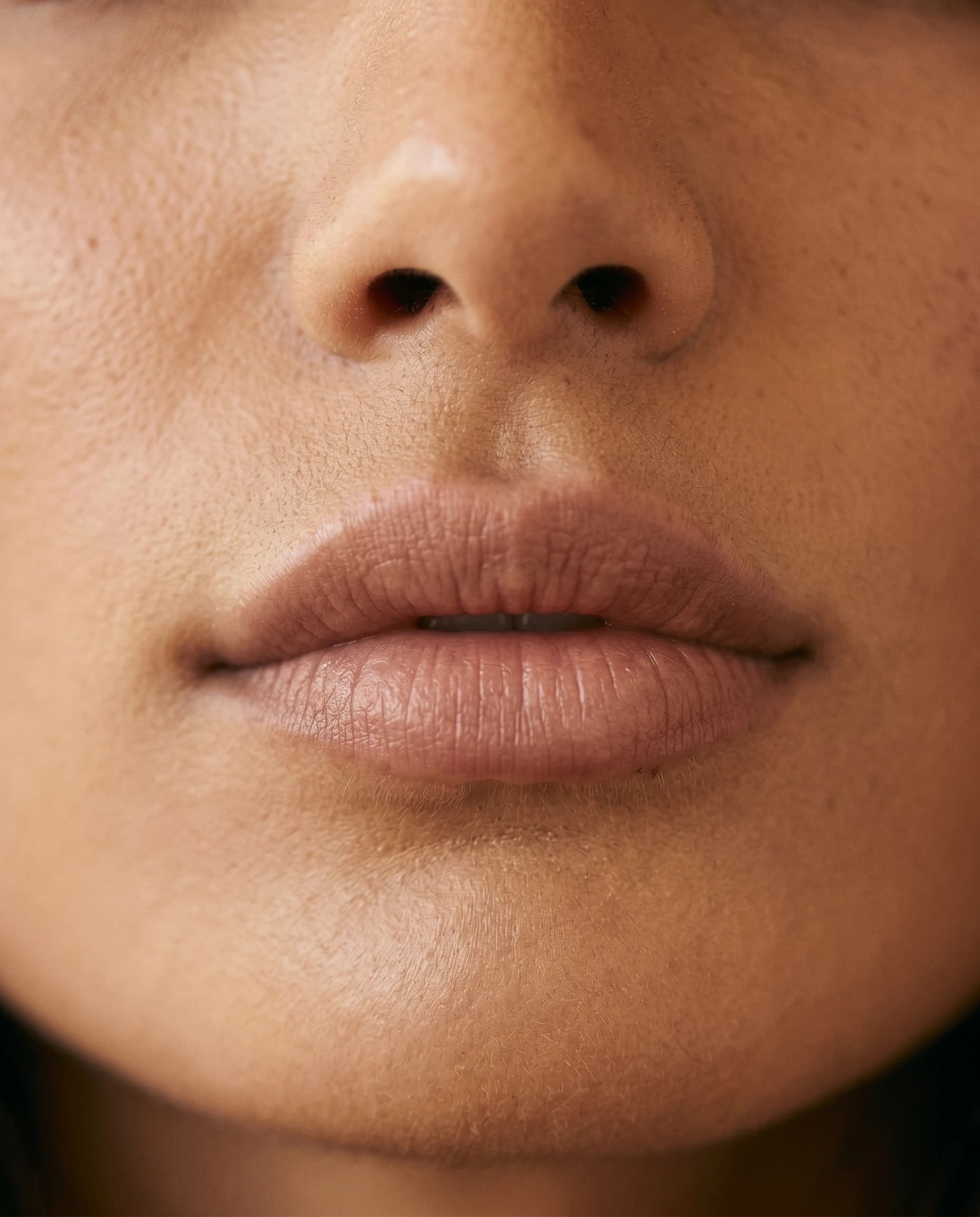
Bullhorn lip lift
Where there is pronounced laxity of the upper lip — the bullhorn lift can be combined specifically.
Learn more
In the consultation we establish what is possible — and what is not. In person at the Isartorplatz, unhurried, with no sales pressure.
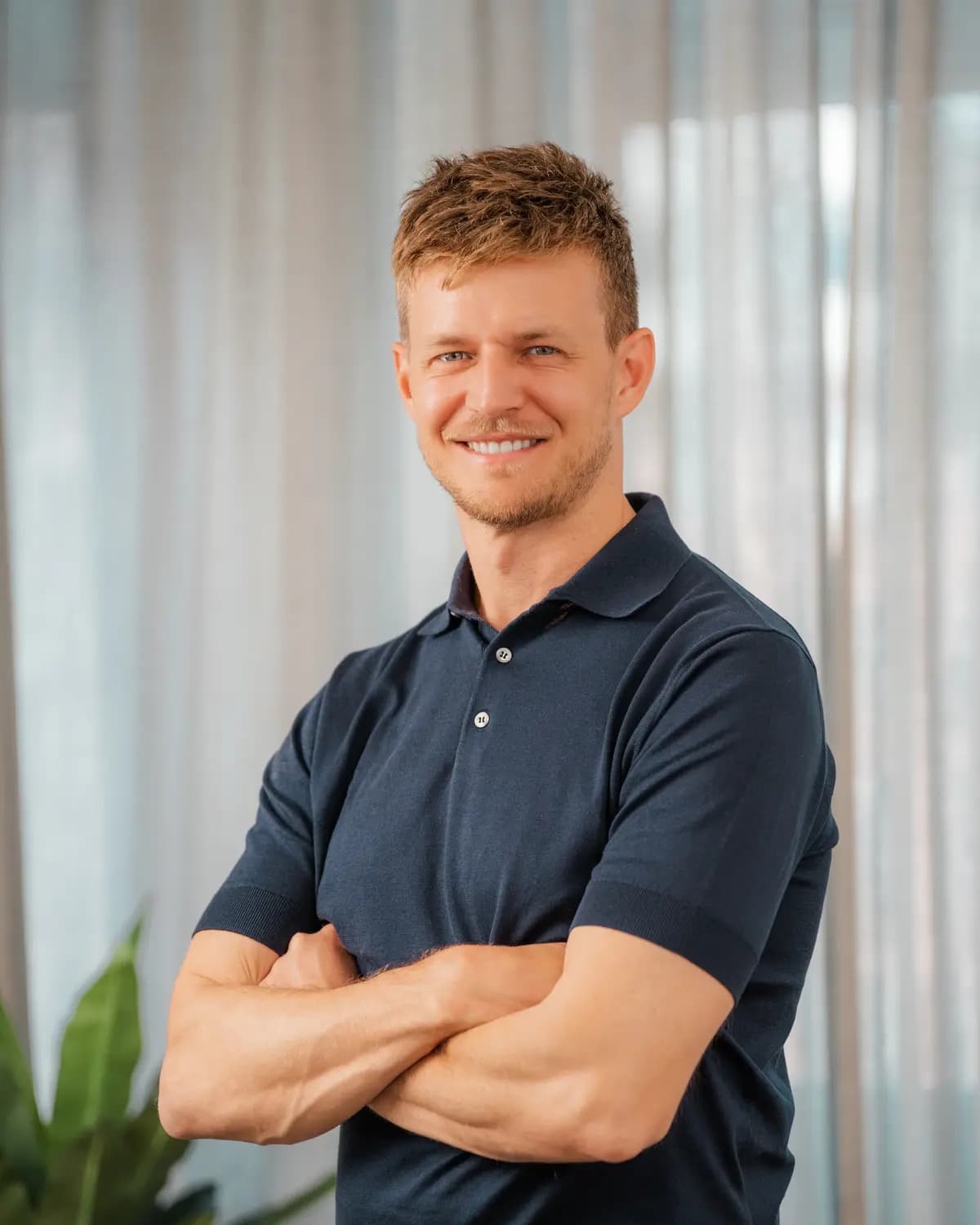
Dr. Fabian Weinschenk
Specialist in plastic and aesthetic surgery (Facharzt)