Mastopexy · Lejour-Lassus, scar-sparing
Shape, raised again. Three incisions, chosen individually. Lejour-Lassus is our speciality — scar-sparing, with a natural result.
Treatment
What is Breast lift?
The breast lift (mastopexy) is a surgical procedure to raise and reshape a breast that has lost firmness, typically after pregnancy and breastfeeding, pronounced weight loss or age. At Ästhetik am Isartor in Munich, Dr. Fabian Weinschenk provides the medical direction. Three incisions match the degree of sagging. Moderate: the mini lift, periareolar; intermediate: the Lejour-Lassus or lollipop technique, adding a vertical line to the inframammary fold, the practice's speciality, scar-sparing and natural-looking; pronounced: the T or anchor incision, plus a horizontal line in the fold. Excess skin is removed, the glandular tissue remodelled and the nipple moved higher on a pedicle with intact blood and nerve supply; sensation and the ability to breastfeed are preserved in the vast majority of cases. A breast lift gains no additional volume: the breast is raised and reshaped in its own substance. For more volume, an implant or fat transfer can be combined in the same session. It takes two to four hours under general anaesthesia (mini lift: local anaesthetic with sedation where appropriate) and requires one night as an inpatient. Support bra for four to five weeks, day and night. Purely aesthetic: health insurers do not cover the cost.
Suitability
Who is Breast lift suitable for?
A breast lift raises a breast that has lost firmness and reshapes it — typically after pregnancy and breastfeeding, after pronounced weight loss, or with age. It corrects shape, not volume.
Suitable for
A breast lift is suitable where there is lax skin after pregnancy and breastfeeding, sagging after pronounced weight loss, age-related sagging or asymmetrical breast ptosis (sagging). The mini lift is decided by moderate sagging (for example where the nipple still sits just above the inframammary fold); the Lejour-Lassus technique by intermediate sagging; the T incision by pronounced sagging with a clear excess of skin. The requirements: a weight that has been stable for 6 months, breastfeeding finished for at least 3 months, realistic expectations about how the scar will look — and a clear understanding that a breast lift corrects shape, not volume.
Not suitable for
A breast lift is not advisable where breastfeeding has not yet finished or where there is a wish for children in the immediate future — a further pregnancy with breastfeeding can change the result. Acute wound-healing disorders or infections and active anticoagulation that cannot be paused postpone the procedure. Nicotine use should be paused for at least four weeks — wound-healing disorders at the T-junctions affect smokers more often. Where there is a lack of volume without lax skin, a breast lift alone is not the right answer — an implant or fat transfer comes into question instead.
Which incision comes into question we decide together in the personal initial consultation (€100), after a clinical assessment of the degree of sagging, skin quality and the position of the nipple.
Method
Three incisions. One of them is our speciality.
There is no standard incision — the right choice depends on the degree of sagging. The Lejour-Lassus technique is the practice's speciality: scar-sparing, with a natural-looking result.
- Minimally invasive
Mini lift
Mini lift (periareolar)
- How it works
- An incision around the areola only, the smallest scar
- Strength
- For moderate sagging · local anaesthetic with sedation where appropriate
- Areas
- Periareolar
- Standard
Lejour-Lassus
Lejour-Lassus (lollipop)
- How it works
- Periareolar + a vertical line to the inframammary fold
- Strength
- Scar-sparing · a natural result · the practice's speciality
- Areas
- Periareolar + vertical
T incision
T incision (anchor)
- How it works
- Periareolar + vertical + horizontal in the inframammary fold
- Strength
- The greatest scope · for pronounced sagging
- Areas
- Periareolar + vertical + horizontal
With all three variants the nipple is moved upwards on a pedicle that keeps its blood and nerve supply — sensation and the ability to breastfeed are preserved in the great majority of cases. The indication is established in the medical initial consultation (€100). Clinic fees are shown separately.
Technique
Lollipop. A circle and a line.
The Lejour-Lassus technique combines a circular incision around the areola with a single vertical line down to the inframammary fold — no horizontal scar beneath it. The result is scar-sparing and looks natural, because over time the vertical line matures into a fine, barely visible scar. It is the standard for most of our patients.

Restoring shape — not inventing it. What is already there, raised anew.
Procedure
How the procedure works
Four steps, clearly separated — from the initial consultation with an individual sketch of the incision, through the one-night inpatient preparation, to aftercare with a support bra and silicone scar sheets.
 Schritt 01approx. 60 min.
Consultation
In the personal initial consultation (€100) we assess the degree of sagging, skin quality and the position of the nipple clinically — the deciding factors in the choice between the mini lift, Lejour-Lassus and the T incision. We draw the planned incision together on paper and discuss whether an accompanying augmentation with an implant or fat transfer makes sense. You receive a written cost estimate afterwards.
 Schritt 02
Preparation
The pre-operative tests (blood count, ECG, mammography / breast ultrasound from the age of 35) must be available. Breastfeeding finished for at least 3 months. No nicotine for at least 4 weeks beforehand. For the one-night inpatient stay, pack a small bag with loose tops that button at the front — after the operation, no jumper over the head.
 Schritt 032–4 hours
Operation
The operation is carried out under general anaesthesia (with the mini lift, where appropriate, under local anaesthetic with sedation). After the individual marking, the skin envelope is mobilised along the planned incision, excess skin is removed, the glandular tissue is remodelled and the nipple, together with its pedicle and its blood and nerve supply, is moved upwards. Wound closure in layers.
 Schritt 04
Aftercare
An inpatient stay of 1 night. Support bra for 4-5 weeks, day and night — it shapes the breast afterwards and supports healing. Avoid heavy physical work for 4-5 weeks; desk work is possible again after 1-2 weeks. Sporting exertion after 4-5 weeks. Silicone scar sheets are recommended to support the maturing of the scar. First check-up after 1 week, further ones after 6 weeks and 6 months.
Facts
Key facts
- Type
- surgical, 1 night inpatient
- Anaesthesia
- general · mini lift, local with sedation where appropriate
- Duration
- 2–4 hours
- Stay
- 1 night inpatient
- Incisions
- mini lift · Lejour-Lassus · T incision
- Support bra
- 4–5 weeks day/night
- Rest
- take it easy for 1–2 weeks
- Sport
- after 4–5 weeks
- Desk work
- after 1–2 weeks
- Breastfeeding
- as a rule still possible (the pedicle is kept)
- Volume
- stays as it is — no gain in volume
- Combination
- possible with an implant / fat transfer
- Health insurance
- purely aesthetic — no cover
- Consultation
- €100 · required before every treatment
Recovery
Recovery & final result
DAY
0–1.
Waking up, resting.
Operation; the support bra is fitted straight away. 1 night of inpatient observation. Pain is usually mild to moderate — well managed with painkillers.
DAY
2–7.
Button at the front.
Strict rest. Support bra around the clock. No movements above the head, no lifting. Button-front tops instead of T-shirts. First wound check after 7 days.
WEEK
2–4.
Back to everyday pace.
Desk work is possible again after 1-2 weeks. Support bra still day and night. Gentle walks are allowed; no movements above the head, no sport. The scars begin to mature; silicone scar sheets are applied in this phase.
WEEK
4–5.
Sport returns.
The support bra ends after 4-5 weeks — after that, a sports bra for exertion. Sport is resumed step by step. Sensation at the nipple begins to normalise.
MONTH
3–12.
The scars fade.
The final result can be assessed after 3-6 months — the shape stabilises and the swelling has subsided. The scars go on maturing over 6-12 months.
Endergebnis
The final result can be assessed after 3 to 6 months — the maturing of the scars takes a further 6–12 months.
Restoring shape, not inventing it — with a stable weight and no further pregnancies, the result lasts in the long term. A further pregnancy with breastfeeding, or a pronounced loss of weight, can change the result; we therefore recommend a breast lift once family planning is complete. Sensation and the ability to breastfeed are preserved in the great majority of cases — the nipple pedicle keeps its blood and nerve supply.
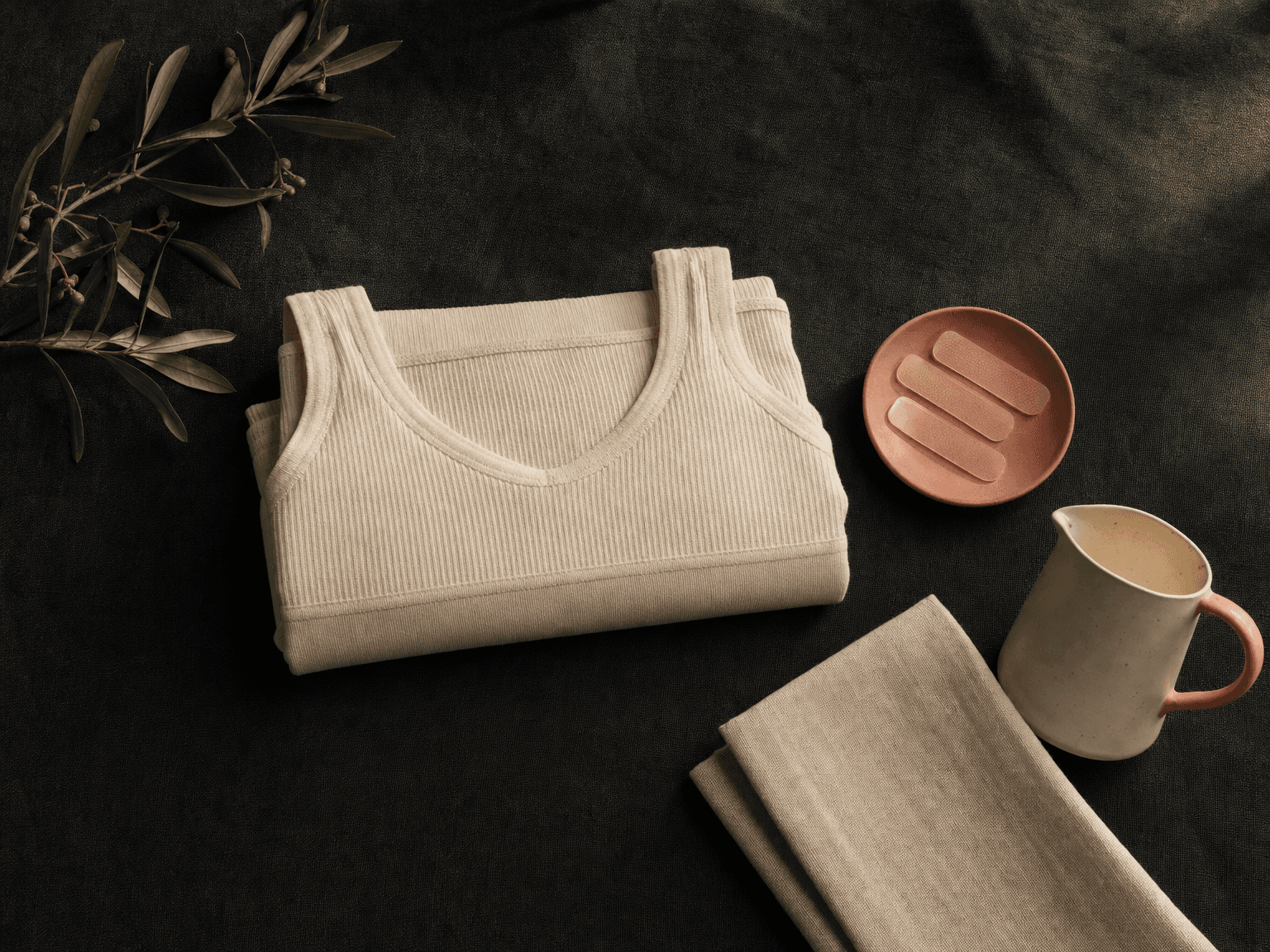
Four to five weeks
Support bra, scar sheets, patience.
A support bra for four to five weeks, day and night, is not a recommendation — it shapes the result. From week two we begin with silicone scar sheets on the fresh scars; they support the maturing of the scar measurably in the first months. With the Lejour-Lassus variant, after six to twelve months practically only a very fine vertical hairline scar remains visible.
Consultation
100€
approx. 45 min · medical · mandatory before every treatment (§ 8 HWG)
Let us establish the indication together.
Which method suits your situation can only be established reliably in a personal examination and consultation.
What is included
- Examination & establishing the indication
- Choice of method, risks & alternatives
- Written cost estimate afterwards
Risks
Risks & informed consent
Carried out properly, the breast lift is an established procedure. We discuss all risks in detail in the personal informed-consent consultation in accordance with § 8 HWG (German Health Advertising Act).
- General
Swelling and haematoma at the breast are part of the expected course in the first weeks after the procedure and typically subside within a few weeks under a consistently worn support bra. Wound-healing disorders are reduced to a minimum by sterile operating conditions, a consistently worn support bra and strict rest in the first few days.
- Specific
Visible scars along the chosen incision are part of the procedure — with Lejour-Lassus a fine periareolar marking plus a vertical hairline scar remain, with the T incision an additional horizontal scar in the inframammary fold. A temporary change of sensation at the nipple is possible and as a rule resolves within months. Asymmetries are minimised by the precise individual marking in the initial consultation. Delayed wound healing at the T-junctions with the anchor incision occurs especially where nicotine is used — pausing it before and after the procedure is therefore a requirement.
- Very rare
A complete loss of sensation at the nipple is very rare, because we keep the nipple pedicle with its blood and nerve supply. With a combined operation involving an implant, implant-specific risks (capsular contracture, displacement) can be added. Thromboembolic events are avoided by early mobilisation, consistent compression and, where appropriate, heparin prophylaxis.
All individual risks are documented in detail during the personal informed-consent consultation in accordance with § 8 HWG (German Health Advertising Act).
Costs
The cost of a breast lift in Munich
A breast lift starts from €9,900. The specific calculation depends on the incision, the length of the operation and any combined operation with an implant or fat transfer. Where the indication is purely aesthetic, it is a self-pay service.
Starting price
from €9,900 individually, according to the incision
Variants
Three incisions — scope and scar
| Aspect | Mini lift | Lejour-Lassus | T incision |
|---|---|---|---|
| Course of the incision | Periareolar | Periareolar + vertical | Periareolar + vertical + horizontal |
| How the scar looks | around the areola | lollipop (barely visible once matured) | anchor (an additional horizontal line) |
| Indication | moderate sagging | intermediate sagging | pronounced sagging |
| Surgery time | 1.5–2 h | 2–3 h | 3–4 h |
| Anaesthesia | general · local with sedation where appropriate | general anaesthesia | general anaesthesia |
| Stay | 1 night | 1 night | 1 night |
| Support bra | 4–5 weeks | 4–5 weeks | 4–5 weeks |
| Starting price | from €9,900 | from €9,900 | from €9,900 |
Specific treatment costs are calculated individually; a combined operation with an implant or fat transfer is shown separately. Clinic fees are likewise shown separately. Where the indication is purely aesthetic, health insurers do not cover the cost.
All starting prices are net · plus 19% VAT · excluding clinic fees for anaesthesia and overnight stay. Individual cost estimate in the personal initial consultation (€100).
Questions
Frequently asked questions
Mini lift, Lejour-Lassus or T incision — how is that decided?
The choice follows the degree of sagging and skin elasticity. Mini lift: for moderate sagging, where the nipple still sits just above the inframammary fold — the smallest scar. Lejour-Lassus (lollipop): for intermediate sagging — our practice's speciality, scar-sparing with a natural-looking result. T incision (anchor): for pronounced sagging with a clear excess of skin — the greatest scope. We decide together in the initial consultation (€100), on the basis of a clinical assessment.
Does a breast lift give me more volume?
No — a breast lift corrects shape only, not volume. The breast tissue that is there is remodelled and raised; the breast is reshaped in its own substance. Where more volume is wanted, we combine the lift in the same session with an implant or a fat transfer.
How long does the result last?
With a stable weight and no further pregnancies, the result lasts in the long term. A further pregnancy with breastfeeding, or a pronounced loss of weight, can change the result — the breast is and remains biological tissue that responds to what life brings. We therefore recommend a breast lift once family planning is complete.
How visible will the scars be?
That depends on the incision. Mini lift: around the areola only, barely visible once matured. Lejour-Lassus: periareolar plus a vertical hairline — scar-sparing, and the vertical scar usually matures into a fine line over 6-12 months. T incision: an additional horizontal scar in the inframammary fold — more visible, but hidden under a bra. Silicone scar sheets from week two support the maturing of the scar measurably.
Will health insurance cover it?
No. Where the indication is purely aesthetic, a breast lift counts as a self-pay service — neither statutory nor private health insurers cover the cost. We clarify the situation regarding the indication in the initial consultation.
Can I have implants placed at the same time?
Yes, very often. Where additional volume is wanted after the lift — for example after breastfeeding, when the breast has shrunk — an implant is placed or fat transferred in the same session. The combined operation does not lead to a substantially longer recovery time; it is, however, technically more demanding. The indication is established in the initial consultation.
Does breastfeeding remain possible?
In the great majority of cases, yes. We keep the nipple pedicle with its blood and nerve supply, so that milk-duct function and sensation are preserved. Where sagging is very pronounced and the resection large (the T incision), the ability to breastfeed can be limited — we discuss that in the initial consultation and plan the operation with corresponding care where there is a wish for children.
What does a breast lift cost in Munich?
The procedure starts from €9,900. The specific calculation depends on the incision, the length of the operation and any combined operation with an implant or fat transfer. You receive a written cost estimate in the initial consultation (€100).
Why don't you show before-and-after photographs on your website?
For two reasons — one legal, one ethical. First, the German Heilmittelwerbegesetz (§ 11 HWG, the Health Advertising Act) prohibits advertising surgical plastic procedures with before-and-after photographs on publicly accessible websites — a rule in force since 2012 that protects patients from distorted promotional depictions. Second, we respect our patients' privacy: even where written consent exists, many would rather intimate photographs of their body did not circulate on the open web. What you can expect instead: in the personal initial consultation (€100) we show you anonymised examples from our own practice documentation — matched to your indication, your build and your aesthetic goal. Those images are shown with the written consent of the patients concerned, exclusively within the protected setting of the consultation, and are never published online. You get a realistic sense of what to expect without anyone having to give up their privacy for someone else's advertising.
What should I look for when choosing a doctor for aesthetic plastic surgery in Munich?
Three objective criteria help you get your bearings. First, the specialist qualification: "Facharzt für Plastische und Ästhetische Chirurgie" is a legally protected German specialist title requiring several years of specialist training — unlike general, unprotected descriptions such as "cosmetic surgeon". Second, membership of a medical professional society such as the DGPRÄC (the German Society of Plastic, Reconstructive and Aesthetic Surgeons), which requires binding professional standards and continuous further training. Third, the quality of the consultation: a reputable practice takes its time, is honest about risks, alternatives and realistically achievable results, and does not push you towards a decision. At Ästhetik am Isartor the medical direction lies with Dr. Fabian Weinschenk, specialist in plastic and aesthetic surgery (Facharzt) and a member of the DGPRÄC. Procedures are carried out personally by the specialist, and every treatment is preceded by a detailed medical informed-consent consultation (chargeable at €100).
Related
Related treatments
In the consultation we establish what is possible — and what is not. In person at the Isartorplatz, unhurried, with no sales pressure.

Dr. Fabian Weinschenk
Specialist in plastic and aesthetic surgery (Facharzt)